USAIt appears that you are currently in USA.
Confirm
Select a different country

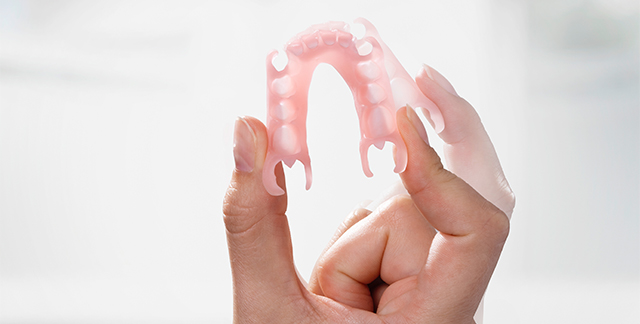
VITA VIONIC® BASE RESIN FLEX

3D printing material for the production of flexible denture bases

Today, digital prosthetics offer more than just full dentures: VITA VIONIC BASE RESIN FLEX enables the fabrication of flexible partial dentures for temporary use – with precision, efficiency and comfort. Add a new level of ease to your daily lab work.

Cost effective
Efficient, material-saving and cost-effective fabrication of flexible partial dentures for temporary use.

Convenient
Flexible, metal-free material with a natural esthetic and high comfort. The transparent shading allows the individual gum color to show through, while at the same time allowing the denture to be repaired and extended.

Easy to process
Reliable workflows, thanks to chemical adhesion between the base and teeth, good millability and brilliant high-gloss polishing.

Validated printers:

  • ASIGA Max/Mini
  • ASIGA Max 2
  • ASIGA Ultra
  • ASIGA PRO 4K
  • Formlabs Form4B (open material mode required)
  • Rapid Shape ONE, PRO 20, D20+, D30+, D50+
  • Straumann P Series

Validated post-curing units:

  • NK Optik Otoflash G171 N2
  • NK Optik Otoflash 250
  • Rapid Shape RS cure
  • Rapid Shape RS cure XL
  • Straumann P Cure

Validated washing units:

  • Ultrasonic Bath Bandelin Sonorex
  • Rapid Shape RS wash
Brochures

No. 10932 VITA VIONIC BASE RESIN FLEX (Version 001)

Software and Software updates

1. 3Shape - VITA material parameters (Version 002)

2. exocad VITA material parameters (Version 002)

Safety data sheets

SD3149 VITA VIONIC BASE RESIN FLEX clear (Version 002)

SD3150 VITA VIONIC BASE RESIN FLEX pink-translucent (Version 003)

Easy download for multiple documents

Download a .zip file containing all the selected files in a single step.
Simply tick the files then click here.

Find out more about VITA VIONIC BASE RESIN FLEX, review real-world case studies and gain valuable insights into the use and benefits of the product.

Bubble formation occurs when the denture base is cured together with the teeth in a vacuum post-curing device. How can this be avoided?

VITA recommends the following procedure for vacuum-based, validated devices (such as the Asiga Cure or RapidShape Cure):

Step 1: ​

Secure the printed teeth in the denture base using a light-curing UV hand lamp, provided that you are using the printing material as an adhesive. It is sufficient to irradiate the areas between the tooth and the base for a few seconds.

Step 2:​

Complete curing in the device using the VITA template.

Can a clasp denture printed from VITA VIONIC BASE RESIN FLEX be repaired/extended?

Yes, printed clasp dentures made from VITA VIONIC BASE RESIN FLEX can be repaired and extended.

VITA recommends the following materials and procedures for this purpose:

  • For the shade pink translucent: Astron Labtec Pro
  • For the shade clear: Astron Clearsplint
  1. Sandblasting with Al2O3 (50 µm, 2 bar)
  2. Application of VITA VM LC Primer II to condition the denture base.
  3. Apply a thin, even layer using a disposable brush. Then cure with an approved light-curing device in accordance with the polymerization instructions for VITA VM LC Primer II.
  4. Application and processing of Astron Clearsplint or Astron Labtec Pro according to the manufacturer's instructions.

Repairs using classic cold polymer are also possible in principle. However, the rigid material can impair the flexibility of the partial denture, thereby reducing the expected service life of the denture.

Which UV filter should be used to cure VITA AKZENT LC customized prostheses in the Otoflash G171 N2?

The Otoflash G171 N2 has been validated for VITA AKZENT LC with a UV filter type 280 N2. This filter transmits wavelengths from 280 to 700 nm.

What devices have been validated for use with VITA VIONIC BASE RESIN FLEX?

VITA VIONIC BASE RESIN FLEX is compatible with a wide range of commonly used printers and post-curing units. A current list of successfully validated devices can be found on the product page under the "System compatibility" tab or at the following link: VITA VIONIC RESIN | Validated devices

What bonding gap settings are recommended for combination with printed or milled teeth?

Material combinations Recommended bonding gap
Printed denture base and printed denture teeth made from VITA VIONIC DENT RESIN 150µm
Printed denture base and milled teeth made from VITA VIONIC DENT DISC multiColor 150µm

What are the design recommendations for VITA VIONIC BASE RESIN FLEX?

The material thickness determines the flexibility of the partial denture. The finer the clamp design, the more flexible it reacts, while a stronger design provides more stability.

  • Clamps: Ideally 1-1.5 mm
  • Minimum wall thickness of tooth pockets: 0.8-1 mm
  • Bonding gap for teeth: 150µm
  • Palatal: 2-3 mm
  • Sublingual: 3-5 mm

What are the recommendations for cleaning?

The cleaning process is carried out by dental laboratories/dental practices in an ultrasonic bath (room temperature water bath). Do not use heat-based disinfection or sterilization methods. This could cause the denture to lose its shape.

Brief immersion disinfection is possible without any problems, provided that ethanol-based disinfectants are not used.

For daily cleaning of the dentures, the patient should use lukewarm water, a soft toothbrush, liquid soap or dishwashing liquid. Rinse well afterwards. Denture cleaning tablets can be used according to the manufacturer's instructions.

Notes: Do not use toothpaste, as the abrasive particles are coarse and will scratch the dentures. Do not use acids or solvents, as these will deteriorate the material properties when applied.

Wie viele Prothesenbasen kann ich aus 1kg Prothesenbasisharz drucken?

Aus 1 kg VITA VIONIC BASE RESIN FLEX können ca. 606 flexible Klammerprothesen gedruckt werden, welche eine Größe von 1-2 zu ersetzenden Zähnen haben und in eine kleine Schaltlücke passen.

Die tatsächliche Anzahl gedruckter Objekte, die mittels 1kg Harz hergestellt werden können, ist von mehreren Faktoren abhängig wie z.B. der Größe der Klammerprothese, der Anzahl an Stützstrukturen und ob das Harz in der Druckwanne gelagert wird bzw. Materialverluste beim Abtropfen entstehen.

VITA VIONIC® Workflows